Case Study
AlanaEnabled App
Redesigning AlanaEnabled: Bridging Authenticity and Ease in Mobile Shopping
Overview
Timeline: Feb 2024 - Jun 2024
Platform: Mobile app (in collaboration with Alana Marketplace web team)
Team Size: 5 (Mobile App Team)
My Role: Branding lead, product page designer, contributor to app hierarchy and content structure, and cross-functional point of contact with the web team
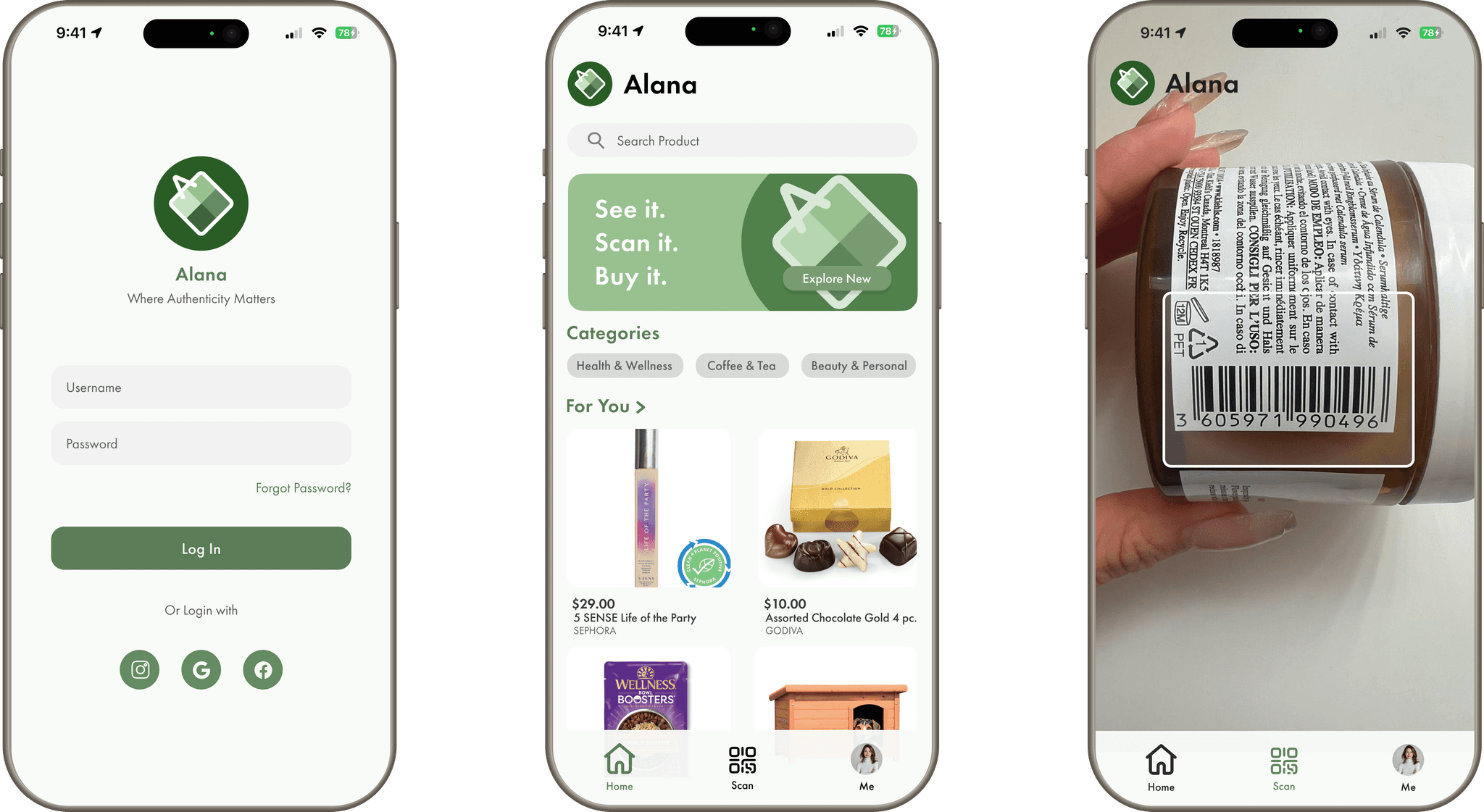
Final prototype
Alana Enabled is a mobile app that helps users scan barcodes to access authentic product listings from verified retailers. It’s built around the idea that trust and ease should go hand-in-hand. But when our team stepped in, the original app lacked the clarity, polish, and personalization to support that mission. We focused on turning it into a cleaner, faster, and more thoughtful shopping experience.
Where the experience fell short…
Although the app promised authenticity and convenience, user engagement was limited. Common challenges included:
An outdated interface with inconsistent visuals
An unreliable and unintuitive barcode scanner
A confusing onboarding flow and unclear product value
Minimal personalization or user-driven recommendations
Through our research and internal critique sessions, we identified a lack of incentive for users to engage with the platform unless they already had a product in mind. The app lacked a compelling reason for users to return regularly, and without user data collection or tailored content, it struggled to stand out in a crowded market.
Many users compared the experience unfavorably to tools like Amazon Lens or standard retail apps. The feedback consistently pointed toward a need for smoother functionality, faster performance, and a deeper sense of personalization and value.
Empathize
To understand user needs and friction points, we conducted:
10 in-depth user interviews with diverse users, including college students, working professionals, and skincare enthusiasts
Heuristic Evaluation of the current Alana app by our internal team
Competitive Analysis of 9 retail, discovery, and beauty-related apps (including Sephora, Ulta, Dirty Think, and Amazon)
Here's what we found:
Most users didn’t understand the app’s purpose immediately
The scanner didn’t always work and felt inconsistent
Onboarding left people confused
The interface didn’t build confidence or encourage repeat use
Without user data or personalization, the experience felt flat
We also analyzed how apps like Sephora and Ulta used personalized recommendations, clean interfaces, and robust scanning features to engage users.
Defining Our Focus
We distilled our findings into the following problem statement:
The current Alana Enabled app lacks the usability, personalization, and cohesive branding required to effectively support authentic and confident purchasing.
Our guiding How Might We question:
"How might we incentivize users to choose Alana as the trusted and engaging platform for authentic purchasing?"
We then moved into initial whiteboarding to reimagine the app’s structure from a user-first perspective. I mapped out the key screens with basic streamline to move through them, and this early structure helped us prioritize what mattered most: clarity, control, and smoother interactions.
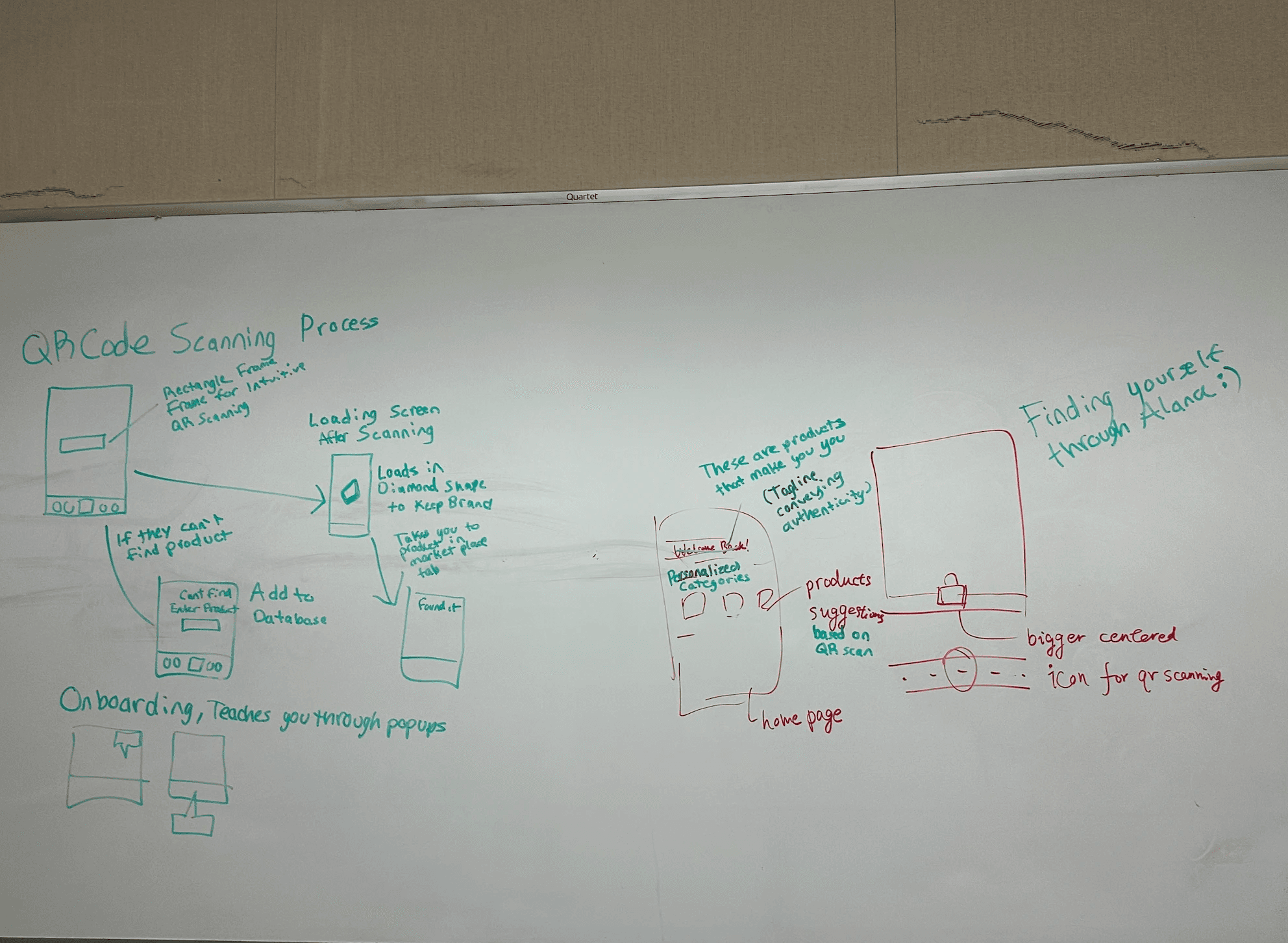
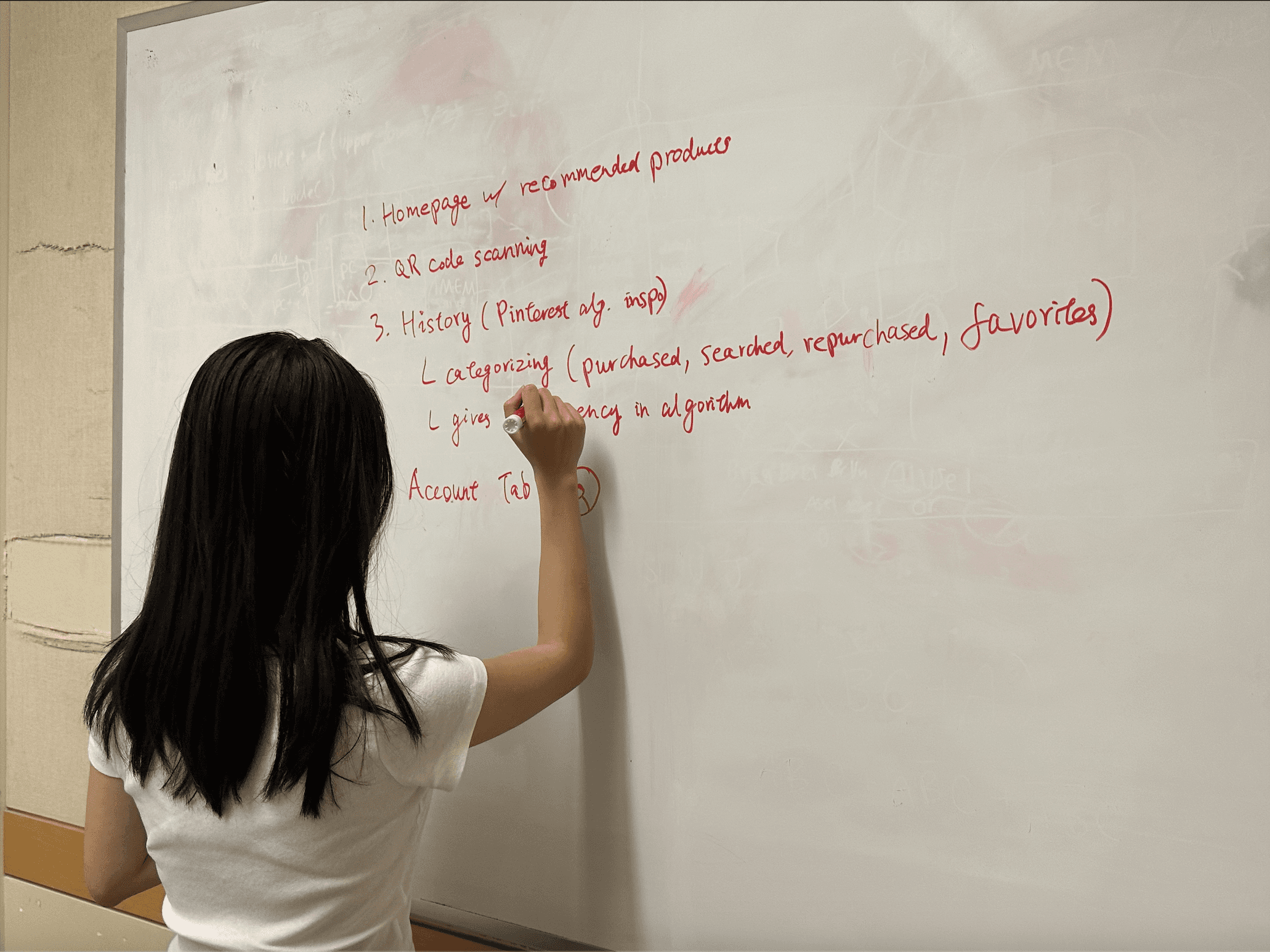
We also reworked the brand direction to feel more emotionally connected. Alana already stood for authenticity, but we wanted the interface to reflect that in a more personal way. I introduced themes like:
"Find yourself through Alana"
"Products that make you YOU"
These helped us shape both visual tone and content voice across the app.
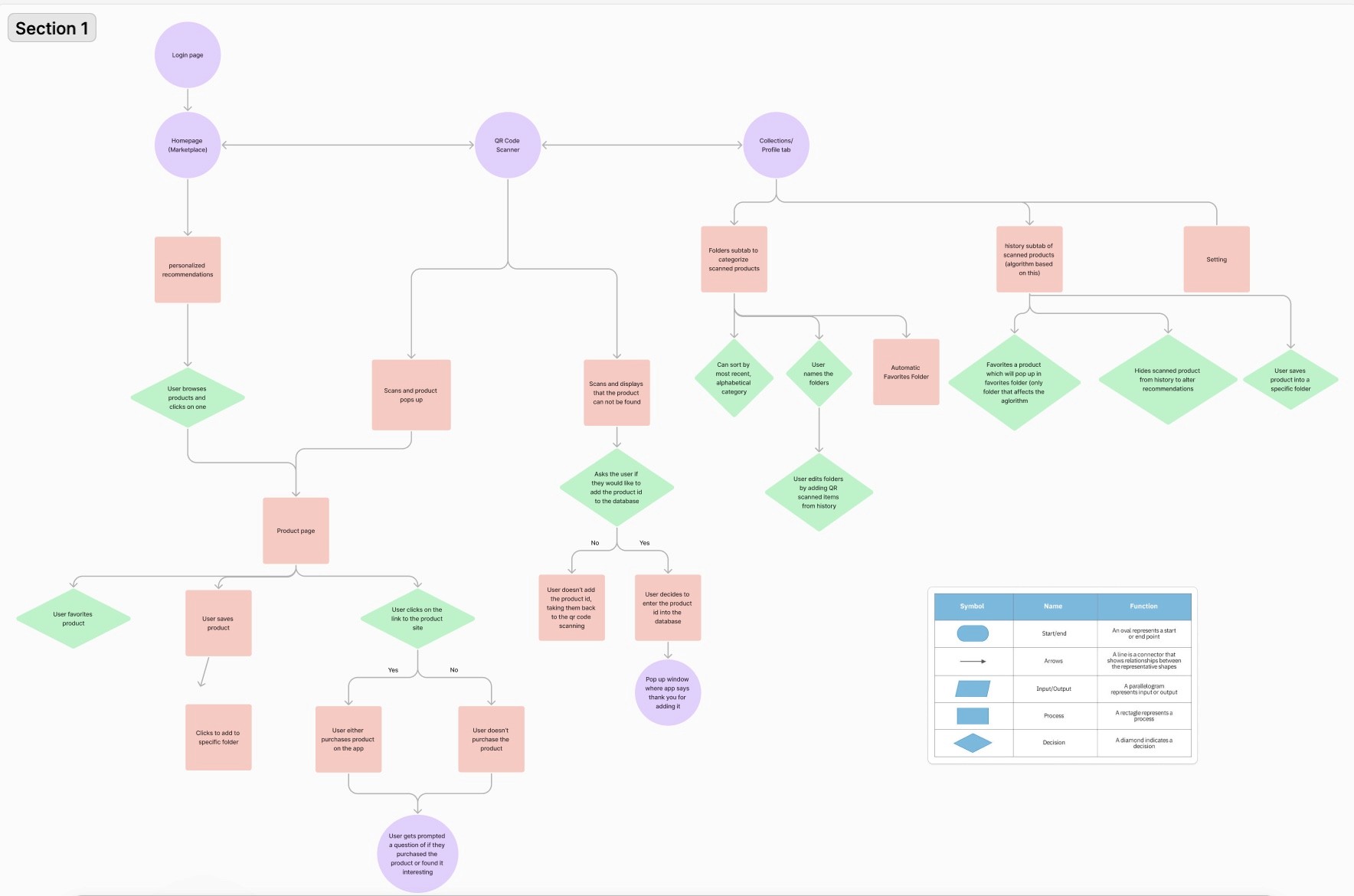
Restructured User Journey
From the initial ideation, we reimagined our user journey hierarchy as detailed below.
Sketches to Lo-fi
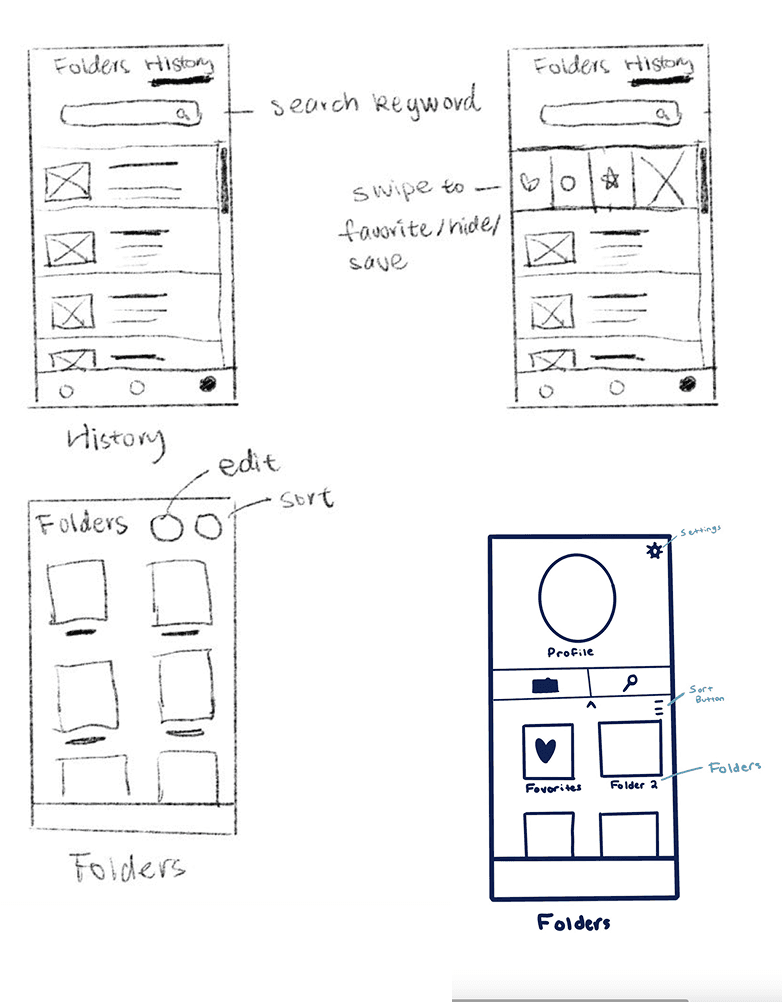
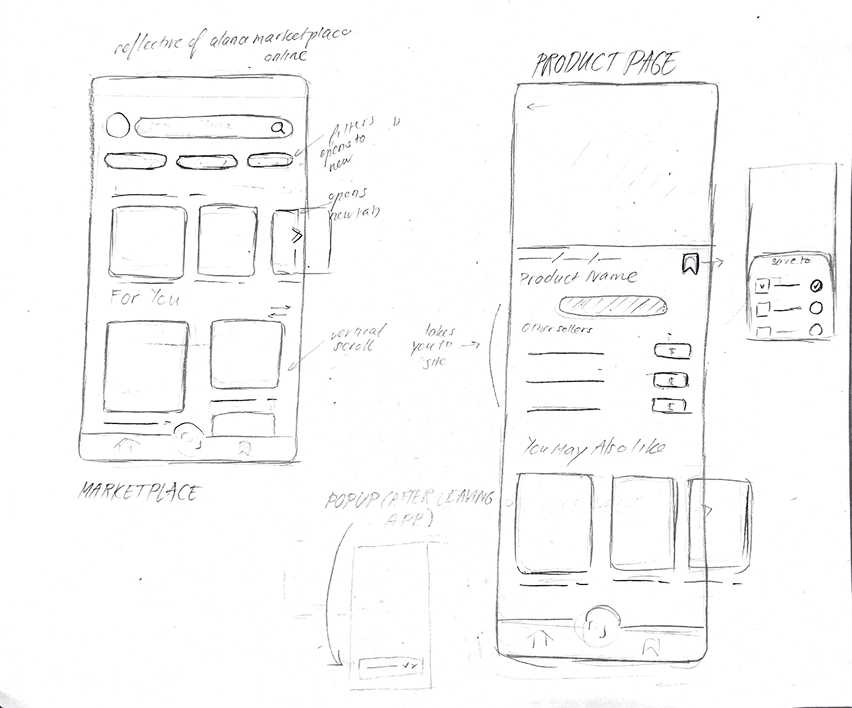
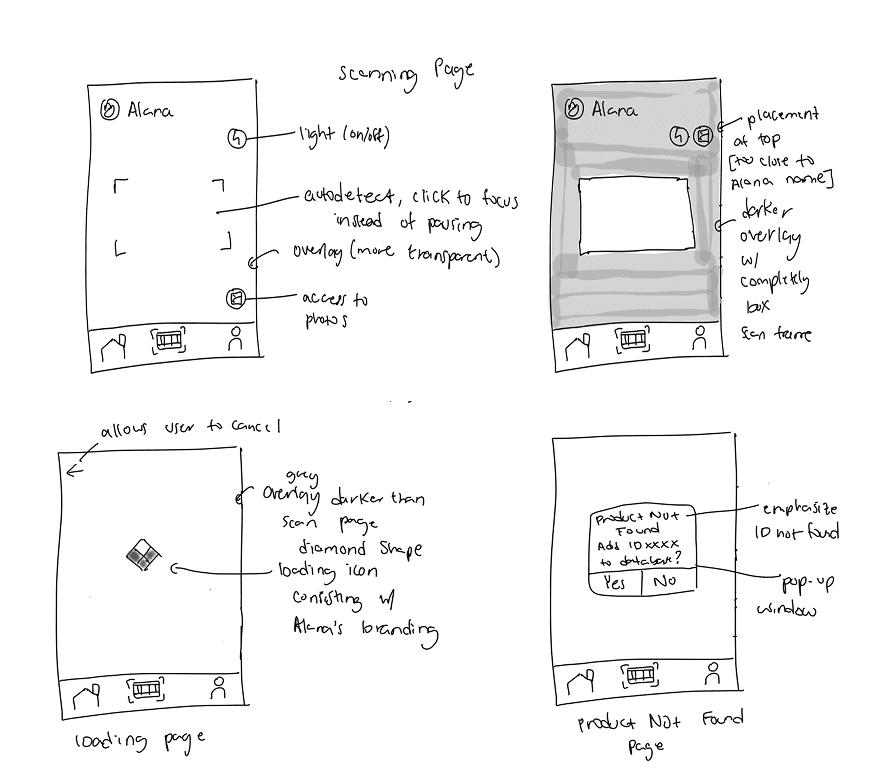
Taken in this hierarchy, we sketched out flows that focused on user control, faster loading, and more meaningful engagement:
Updated scanner with auto-detect, flashlight, and manual control
Navigation bar with five core tabs: Home, Scanner, Collections, History, Profile
New collections feature to help users organize and revisit products
New Visual Identity
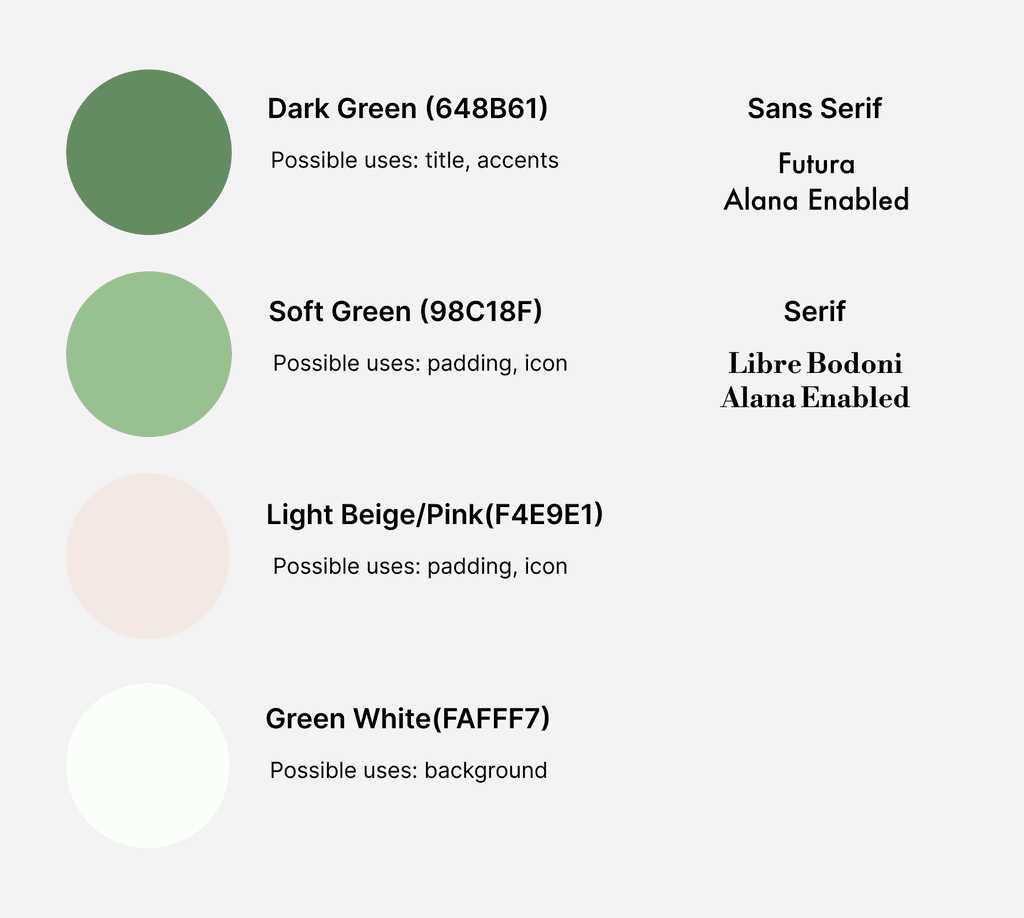
Through color psychology research (with references to our target market of women and wellness branding), I proposed a palette designed to build trust and approachability:
Green: calming, safe, aligned with clean products
Warm pinks: friendly, modern, and feminine without feeling cliché
Balanced tones to create visual harmony while appealing to a broad audience
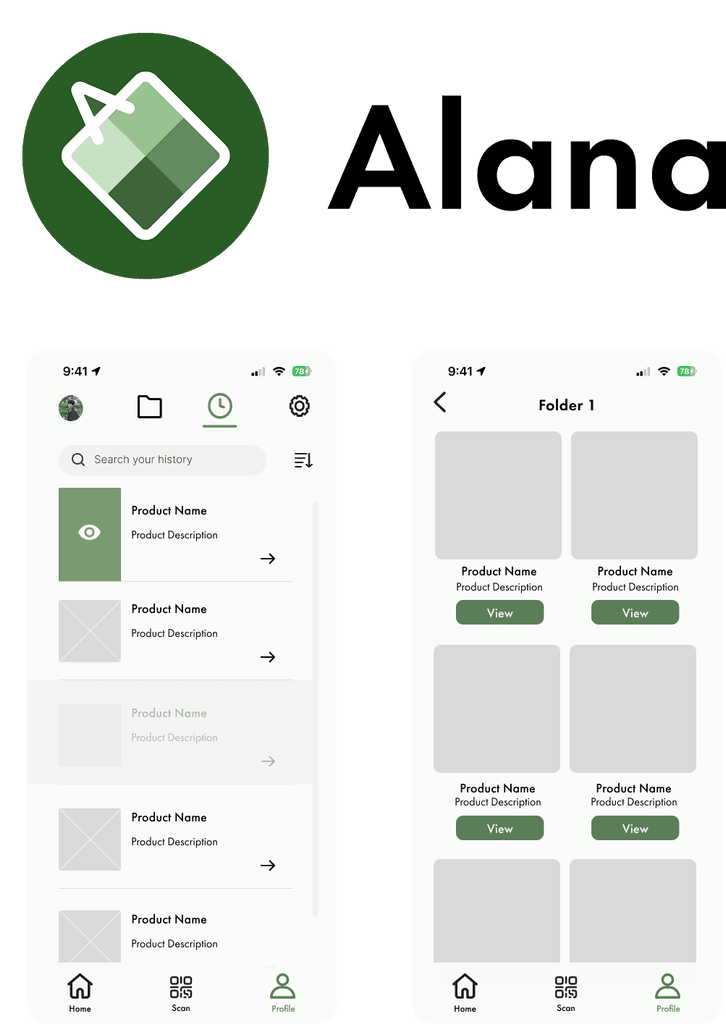
I also ensured visual consistency across both the app and the website by collaborating with the web team on color standards, iconography, and shared brand assets.
Mid-fi's and onward
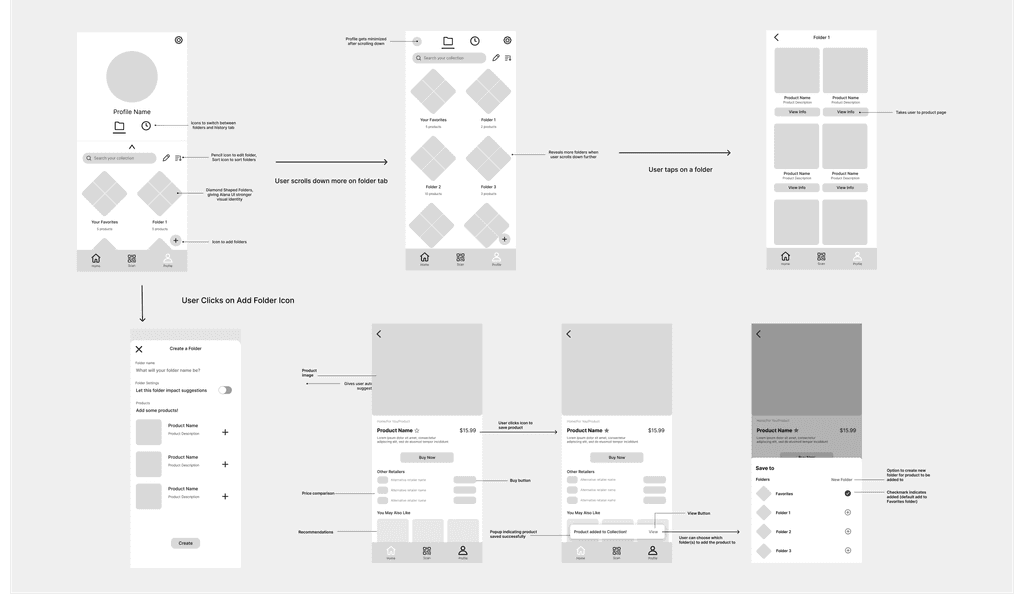
We built a mid-fidelity prototype that reflected our restructured hierarchy and improved flow. Features included:
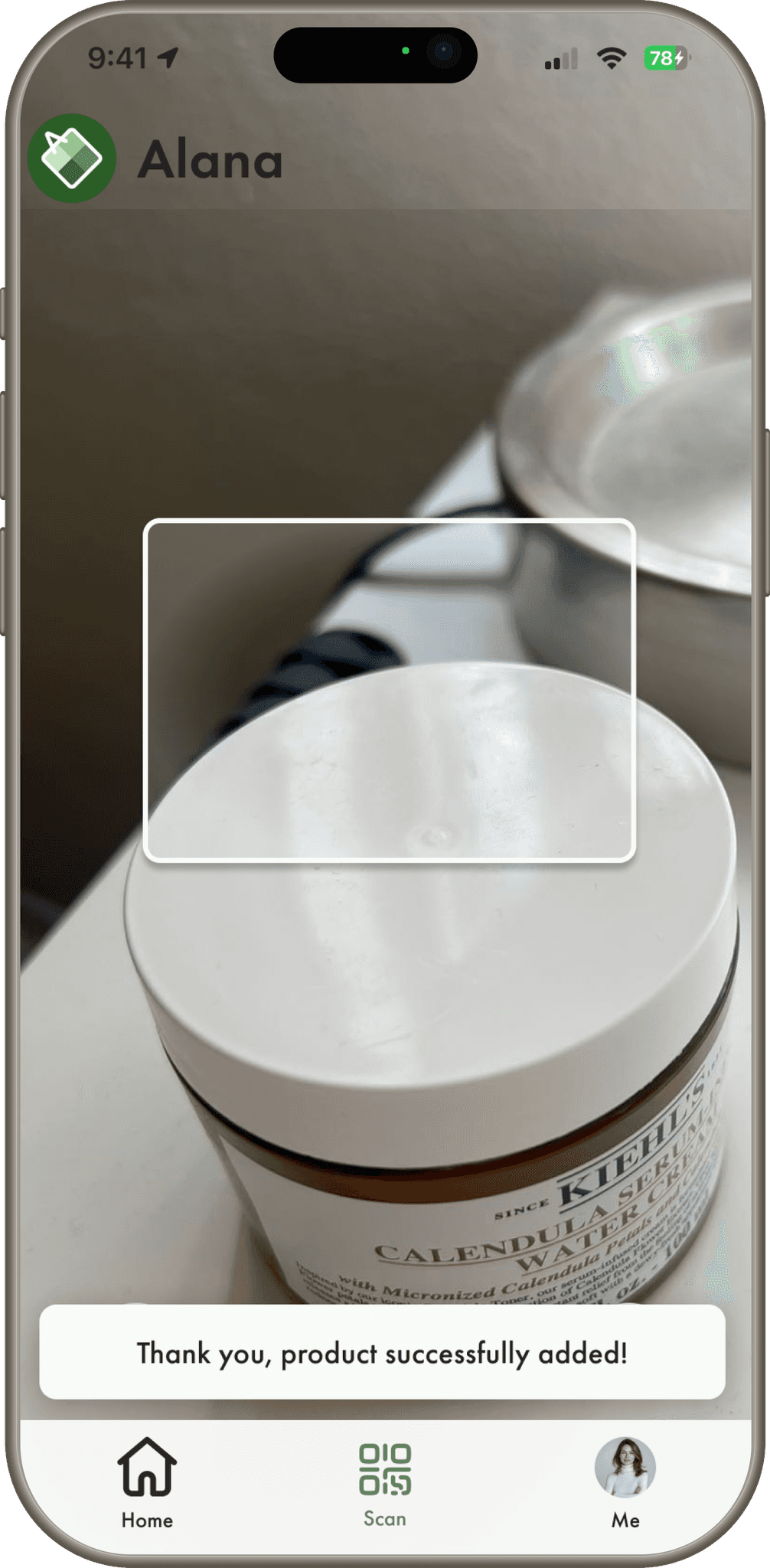
A faster and more reliable barcode scanning process with a simplified diamond-shaped loader echoing the logo
Improved onboarding with concise guidance on app purpose and value
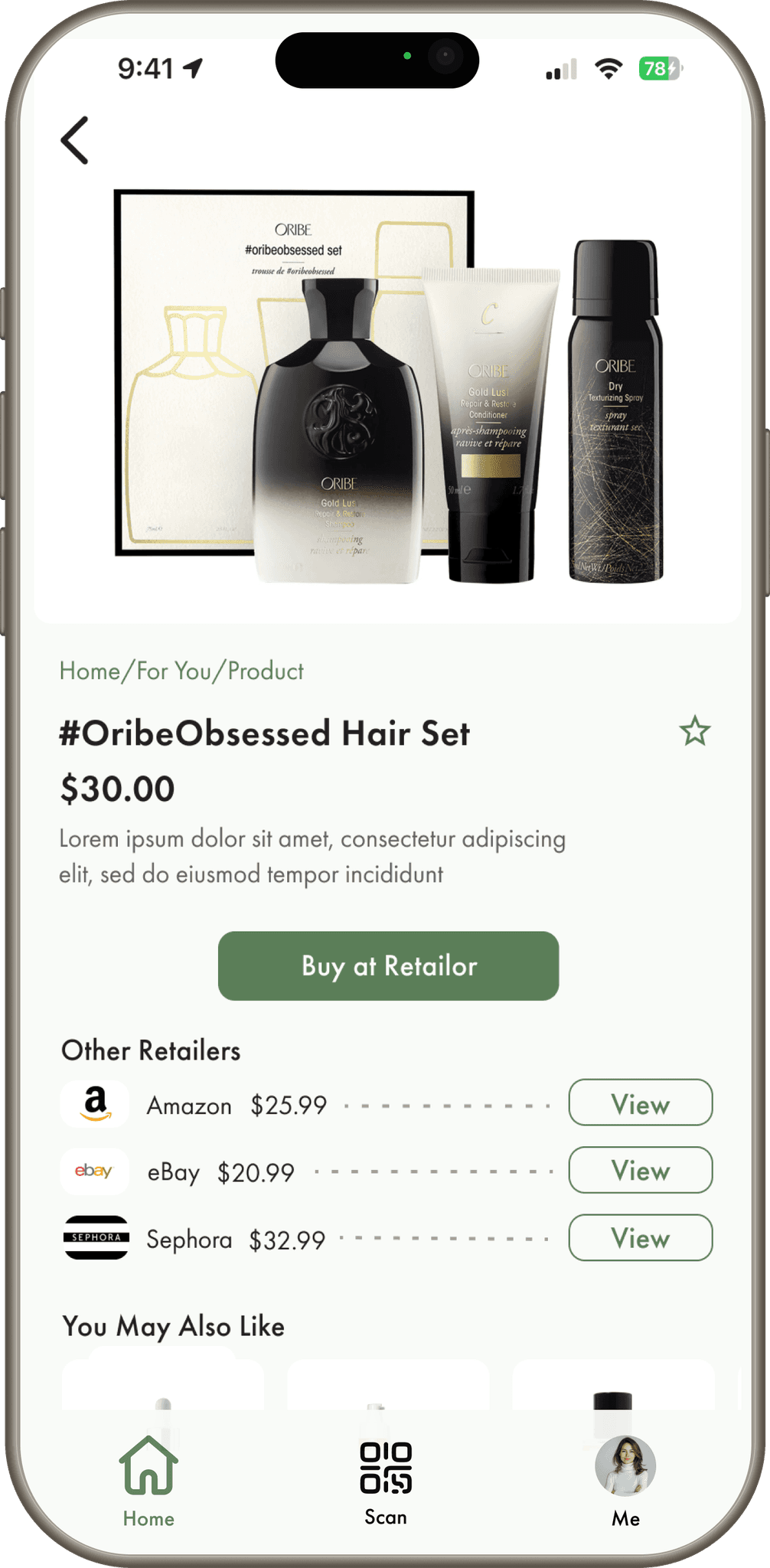
A redesigned product page with clearer price transparency and vendor comparison
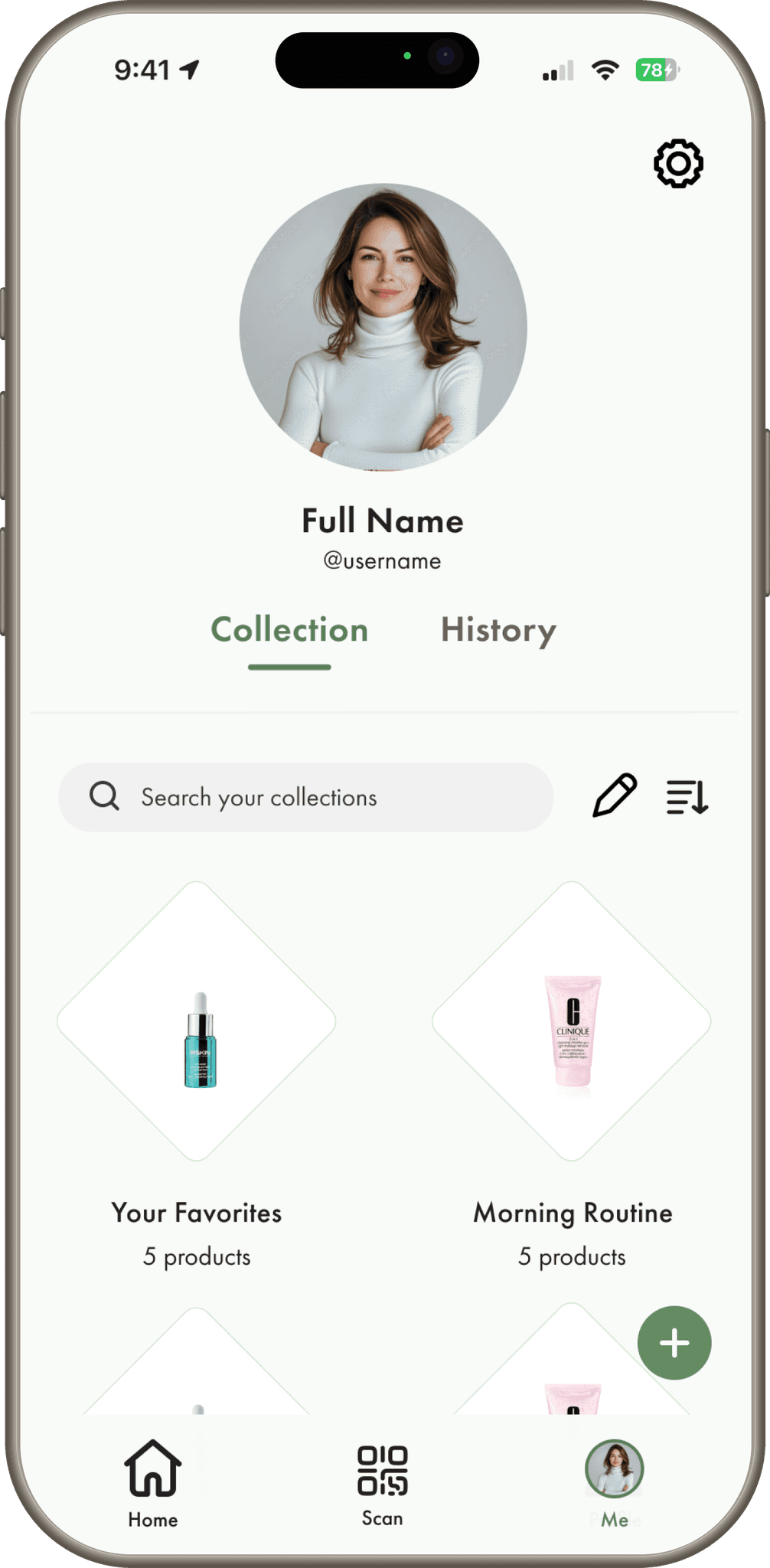
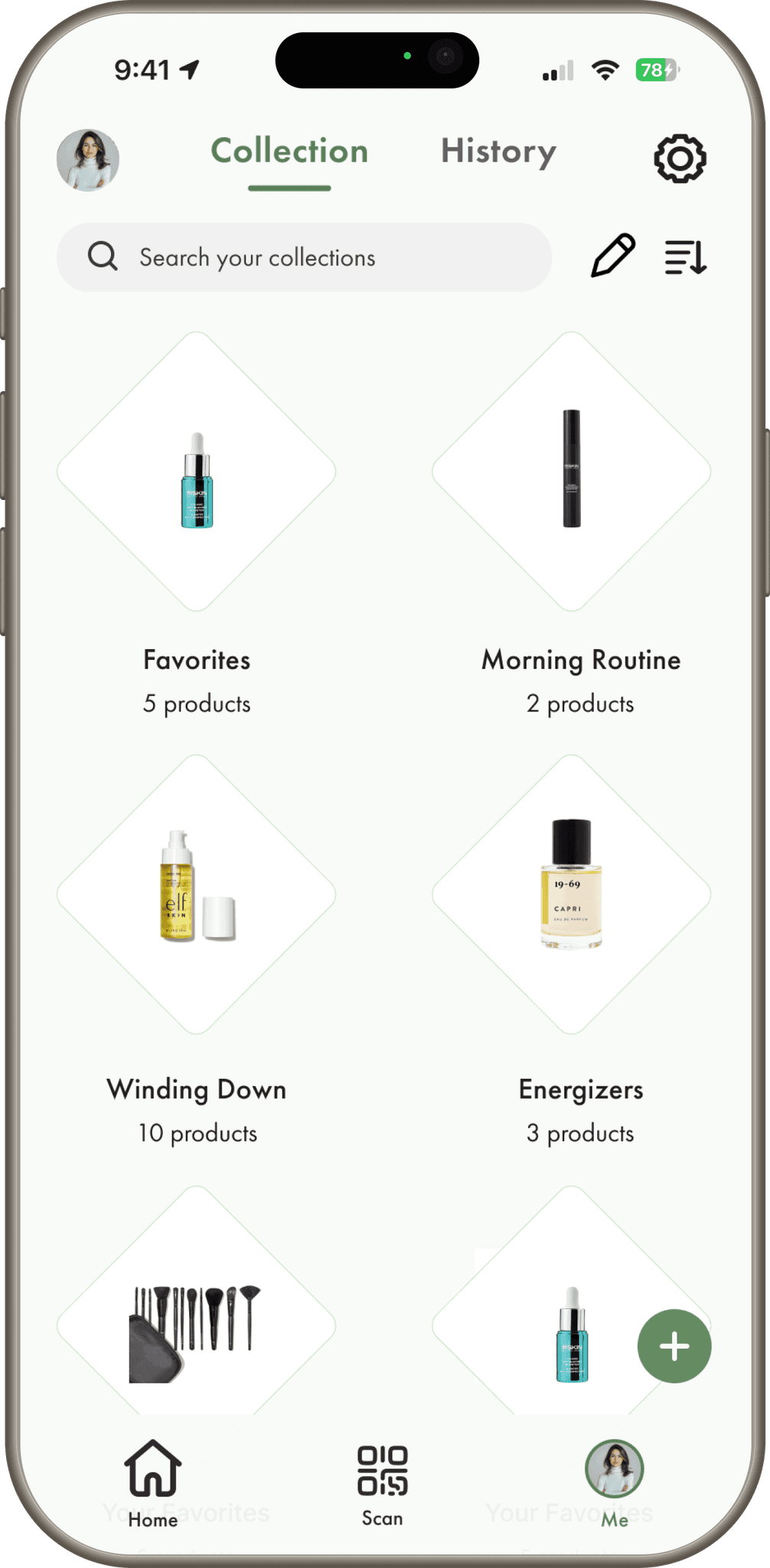
Collections and history tabs to allow users to save, organize, and revisit products easily
As we moved toward mid-fi and hi-fi, I led the product page design, ensuring:
Strong information hierarchy
Scannable layout for quick decisions
Easy save-to-collection interaction with subtle feedback cues
Video Demo
Testing and iteration
After developing the first hi-fi version, we ran usability tests to validate the flow. The participants were asked to explore the prototype using the 'Think Aloud' approach, tasks included:
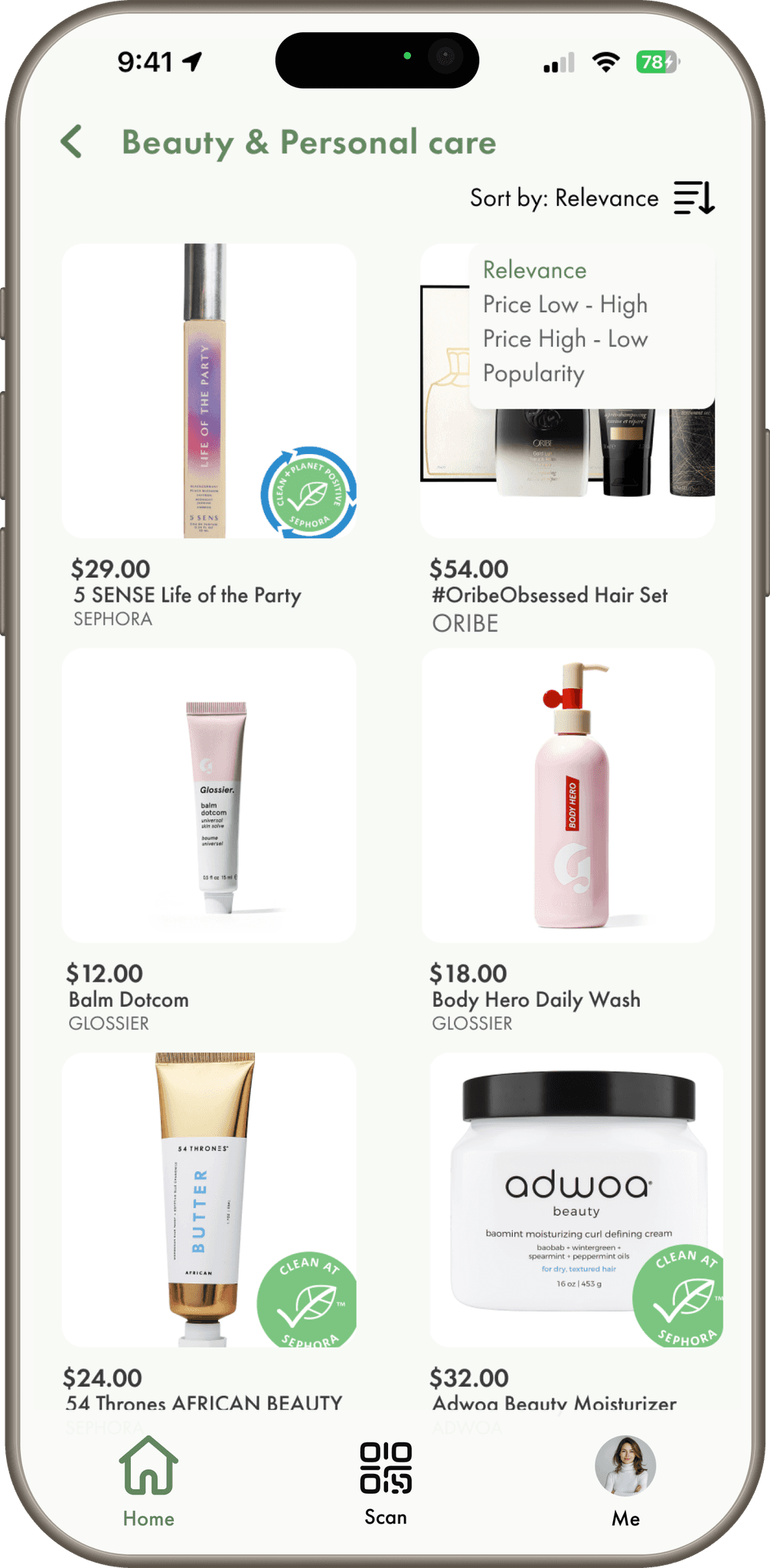
Sorting marketplace results
Saving products to a new collection
Adding a missing product to the database
Managing saved items and deleting from history
Feedback highlights:
Sorting buttons were too small
Collection folders were appreciated but needed clearer feedback
Users wanted rewards for contributing products to the database
Some icons and overlays needed better placement or contrast
We used this feedback to improve task flow, touch targets, and visual clarity. We also started exploring future ideas around personalization and user agency without collecting personal data.
What changed
By the end, Alana Enabled had a refreshed feel that aligned with its mission:
A reliable, responsive barcode scanner
More intuitive navigation and onboarding
Collections and history that help users stay organized
A product page that supports comparison and quick saves
A consistent brand voice rooted in trust and personalization
Final Thoughts
This project brought together the full spectrum of product thinking from visual storytelling to structural clarity. I helped define the architecture, lead the brand refresh, and bring a more human approach to the user experience.
It was also a chance to bridge product and marketing, collaborating with the web team to make sure our visuals and messaging were aligned. Most of all, it was about designing something that users could rely on.
Alana transformed into a personalized, values-driven shopping experience that empowers users to discover products aligned with who they are.
Anna Kuang's Porfolio
2025